Operation FanTrap reveals FIFA 2026 fraud ecosystem with 4,000+ fake domains, phishing, stream 2026-6-18 10:34:41 Author: cyble.com(查看原文) 阅读量:2 收藏
Operation FanTrap reveals FIFA 2026 fraud ecosystem with 4,000+ fake domains, phishing, streaming scams, and dark web-driven cybercrime activity.
Executive Summary
The FIFA World Cup 2026 has become more than a global sporting event. It has evolved into a large-scale cybercrime opportunity exploited by threat actors through a coordinated ecosystem of fraudulent domains, social media channels, messaging platforms, pirated streaming services, and dark web activity. Since May 2026, Cyble Research and Intelligence Labs (CRIL) has identified nearly 4,000 domains impersonating FIFA-related brands, ticketing platforms, streaming services, and fan-facing resources.
Operation FanTrap reveals how threat actors are building end-to-end fraud operations designed to attract, engage, and monetize football fans worldwide. Victims are lured through fake ticket offers, VIP access schemes, counterfeit hospitality portals, and unauthorized streaming platforms. Evidence also shows victims being redirected to private communication channels such as Telegram and WhatsApp, where payment fraud, credential theft, and identity harvesting occur.
CRIL’s investigation also identified growing dark web activity linked to the tournament, including claims of football-sector identity data leaks and discussions around ticket resale opportunities. While the authenticity of some leak claims remains under investigation, their circulation highlights the increasing convergence of fan-targeted fraud, identity theft, and cyber-enabled financial crime.
The campaign demonstrates how major international events create a scalable environment for cybercriminal operations. Through multilingual targeting, extensive infrastructure deployment, and diversified monetization strategies, threat actors are transforming global sporting events into sustained cybercrime ecosystems.
Key Takeaways
- Operation FanTrap is a coordinated investigation into the broader fraud ecosystem exploiting global interest in FIFA events
- Nearly 4,000 FIFA-themed domains were identified supporting phishing, ticket fraud, VIP scams, streaming lures, and brand impersonation.
- The websites used a multilingual infrastructure to maximize victim reach, with a particularly strong focus on Chinese-speaking audiences.
- Telegram and WhatsApp function as transaction layers where victims are moved from public-facing infrastructure into private fraud workflows.
- Pirated streaming platforms serve as credential theft and payment fraud funnels rather than simple copyright violations.
- Dark web discussions and alleged football-sector identity leaks create opportunities for targeted social engineering and secondary monetization.
Campaign overview
| Parameter | Observed Value |
| Campaign Codename (CRIL) | Operation FanTrap |
| Monitoring Window | May 2026 – June 2026 (ongoing) |
| Dominant Fraud Categories | Ticket scam, VIP access fraud, pirate streaming, phishing |
| Primary Target Demography | Chinese-speaking fans, Korean fans, Latin American fans |
| Dark Web Activity | Forum-based ticket resale fraud; identity data leak claims |
The FIFA World Cup 2026 will span the US, Canada, and Mexico, with a 48-team format and global broadcast reach. CRIL’s monitoring uncovered significant spikes in malicious domain registrations mapped to specific attack themes, demonstrating how threat actors rapidly adapted their infrastructure to capitalize on tournament-related interest.
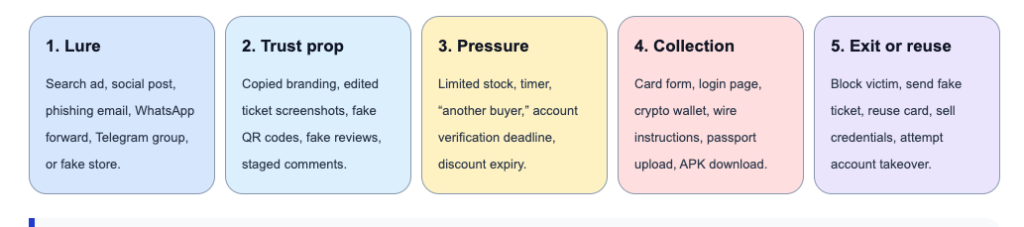
Anatomy of the FIFA 2026 Fraud Ecosystem
Domain Patterns – The Fraud Ecosystem
Threat actors leveraged ticketing, VIP access, official branding, and live streaming to broaden their victim pool. Examples of these domain patterns are shown in the table below.
| Domain Pattern | Example Domains | Count | Fraud Category |
| zh-[term]-fifa.com | zh-worldcuphub-fifa.com, zh-nowlive-fifa.com | 541 | Chinese-language phishing/streaming |
| cn-[term]-fifa.com | cn-vpn-fifa.com, cn-setting-fifa.com | 372 | Chinese-language credential/VPN phishing |
| [term]-worldcup-fifa.com | play-worldcup-fifa.com, vip-worldcup-fifa.com | 413 | Brand impersonation |
| [term]-wc-fifa.com | cctv-maiqiu-fifa-wc.com, ssl-cn-fifa-wc.com | 391 | Ticketing/streaming fraud |
| fifa-ticket-[term].com | fifa-ticket-26.com, fifa-freetickets.*.top | 10+ | Ticket scam |
| fifa-vip-[term].com | fifa-vip-huya.com, fifa-vip-wcplay.com | 84 | VIP/premium access fraud |
| official-[term]-fifa.com | official-live-fifa.com, official-2026-fifa.com | 87 | Brand authority impersonation |
| live-[term]-fifa.com | vip-live-fifa.com, web-live-fifa.com | 219 | Pirate streaming |
| maiqiu variants | chn-maiqiu-fifa-worldcup.com, cctv-maiqiu-fifa.com | 51 | Chinese ticket-buying fraud |
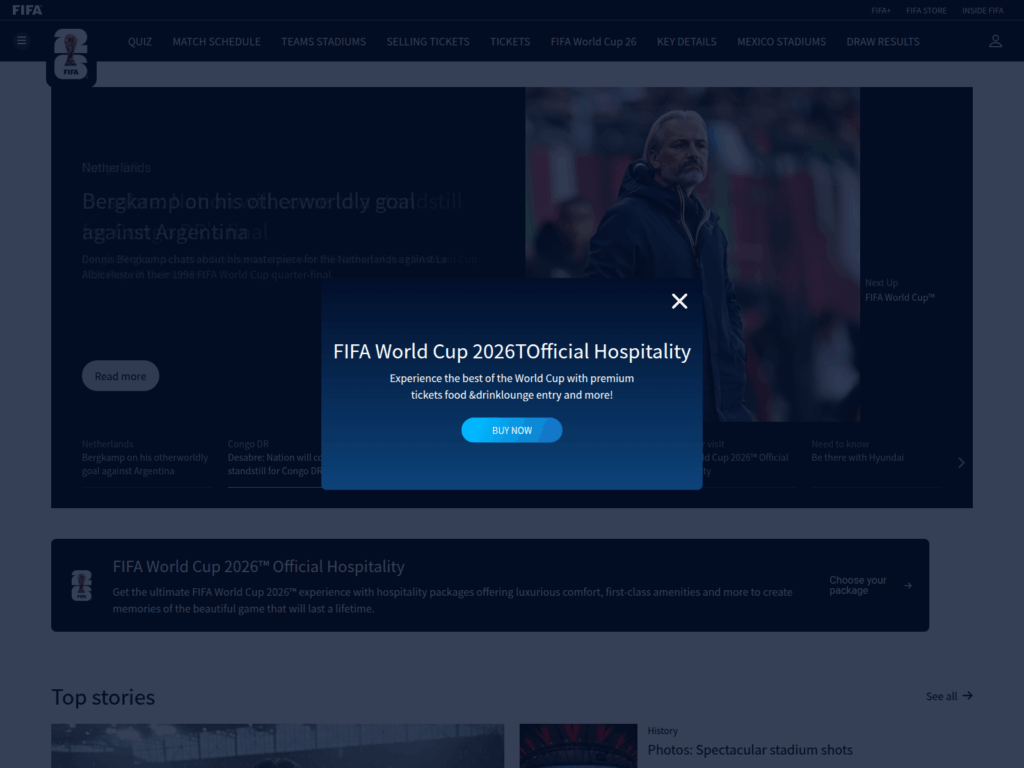
The extensive use of zh-, cn-, and Chinese-language World Cup labels such as shijiebei, pankou, and maiqiu highlights a deliberate focus on Mandarin-speaking audiences. This targeting extends beyond traditional ticket fraud to encompass betting platforms, media-themed credential theft, piracy lures, prize scams, and counterfeit merchandise. This signals a persistent and organized fraud ecosystem designed to capitalize on China’s large football fanbase and strong demand for World Cup-related content and services.
Dark Web Intelligence
We also identified a growing ecosystem of ticket resale fraud on Telegram and WhatsApp, as well as pirated streaming lures. Both are actively used to monetize fan interest and facilitate fraud, credential harvesting, and other malicious activity.
Resell Traps on Messaging Services.
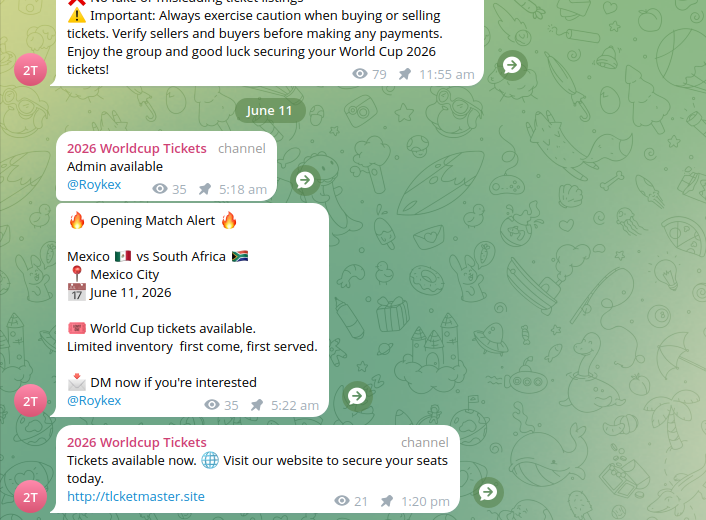
Monitoring of deep- and dark-web sources identified numerous advertisements and reseller communities promoting FIFA World Cup tickets via Telegram and WhatsApp. Fraudsters frequently use these platforms because they facilitate private, direct communication while limiting oversight and accountability.

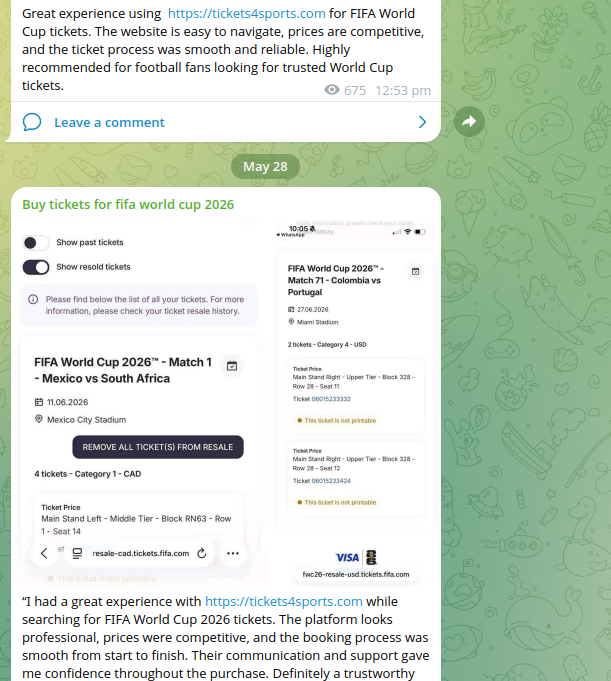
Threat actors often establish credibility through fabricated testimonials, forged purchase confirmations, edited screenshots, recycled ticket images, and scripted customer-support interactions. However, such indicators of legitimacy can be easily manufactured and should not be considered proof of ticket ownership or delivery capability. Additionally, the closed nature of these channels enables attackers to create a sense of urgency, collect payments, and disengage victims with minimal traceability.
The example below illustrates a Telegram-based ticket resale advertisement identified during monitoring, highlighting the use of unofficial and potentially fraudulent sales channels.
The pirated stream trap: free football, expensive consequences
Pirated streaming sites exploit fans seeking free access to World Cup matches, using geo-restrictions, subscription costs, and broadcast limitations as bait. Rather than delivering live streams, many function as fraud and malware distribution platforms, employing fake video players, deceptive download prompts, browser notification prompts, and fraudulent free-trial offers to harvest credentials, payment information, and user data.
To evade detection, we identified domains that avoid FIFA- or World Cup-related keywords in domain names. These links are promoted through fan forums, Discord servers, Telegram channels, and WhatsApp groups, lending credibility to malicious infrastructure.
Examples identified during monitoring include:
- footybite[.]vc
- epicsports[.]in
- footballnewslive[.]online
- totalsportek[.]online
- sportshub[.]fan
- streameast[.]im
The risk is beyond legal or copyright concerns. For many fans, the real danger lay in the broader cybersecurity ecosystem surrounding these platforms. Pirated streaming sites and services often acted as data collection points, quietly harvesting email addresses, passwords, payment details, phone numbers, and device information.
Unofficial streaming apps and APK files added another layer of risk. They frequently requested excessive permissions, delivered intrusive ads, tracked user activity, and in some cases, served as entry points for malware. What seemed like a convenient way to watch a match could quickly turn into a channel for data exposure and system compromise.
Ticket Scams and VIP Access Fraud
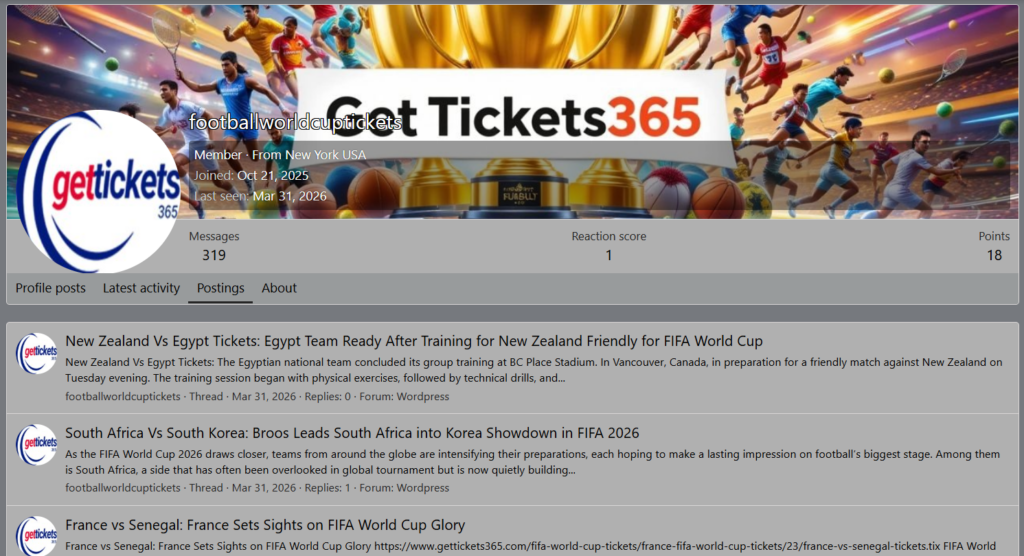
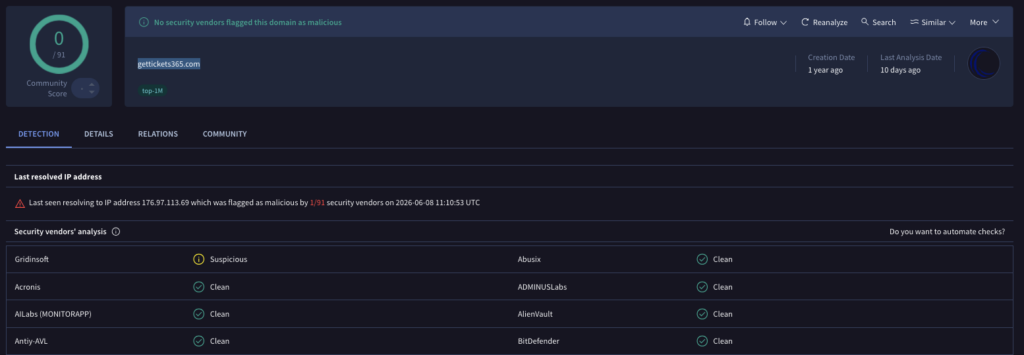
Forum-based ticket promotions added another layer of risk to World Cup scams by combining resale listings with the appearance of community trust. Sellers often seemed more credible than random social media accounts, as consistent posting, forum history, and visible profile activity created a sense of legitimacy. However, this credibility could be misleading. Fans should remain cautious, as an active profile did not guarantee ticket authenticity, official authorization, secure payments, or a successful transfer—even within seemingly trusted communities.
Identity and PII leak claims
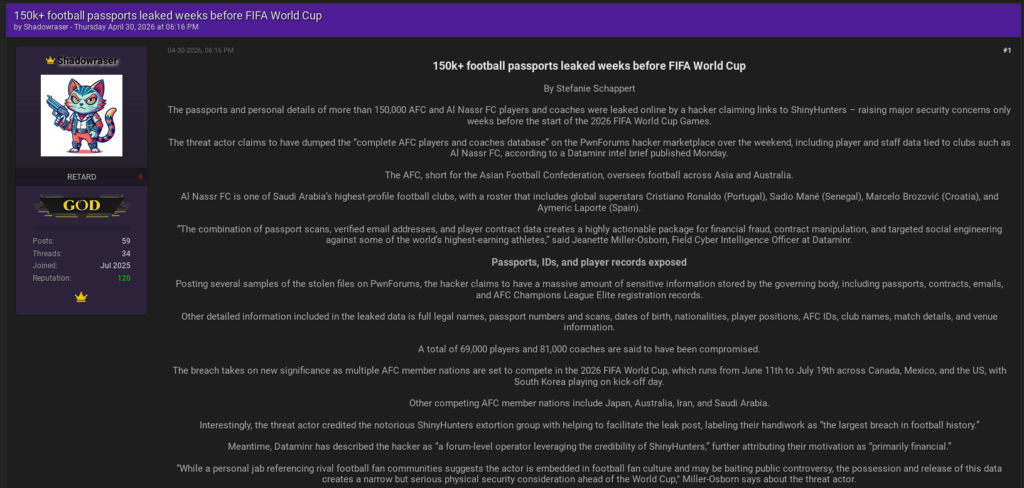
CRIL also observed forum discussions about leaked football-related identity data, highlighting how World Cup–related cybercrime can extend beyond fan scams into the broader football ecosystem. For example, one post titled “150k+ football passports leaked weeks before FIFA World Cup” claimed that passport scans and personal details of over 150,000 AFC and Al Nassr FC players and coaches had been exposed. The alleged leak included sensitive information such as full names, passport numbers, scans, dates of birth, nationalities, player roles, club affiliations, email addresses, contracts, AFC IDs, and even match or venue details.
Such claims require independent forensic verification before a confirmed breach status can be assigned. Regardless of authenticity, the circulation of this data in the pre-tournament window confirms threat actors are actively seeking to monetize football-sector identity assets. If the record set is genuine, it enables targeted spear-phishing against club staff, agent impersonation in transfer fraud, contract manipulation, and abuse of venue access credentials.
Connecting the Ecosystem – Attack Lifecycle
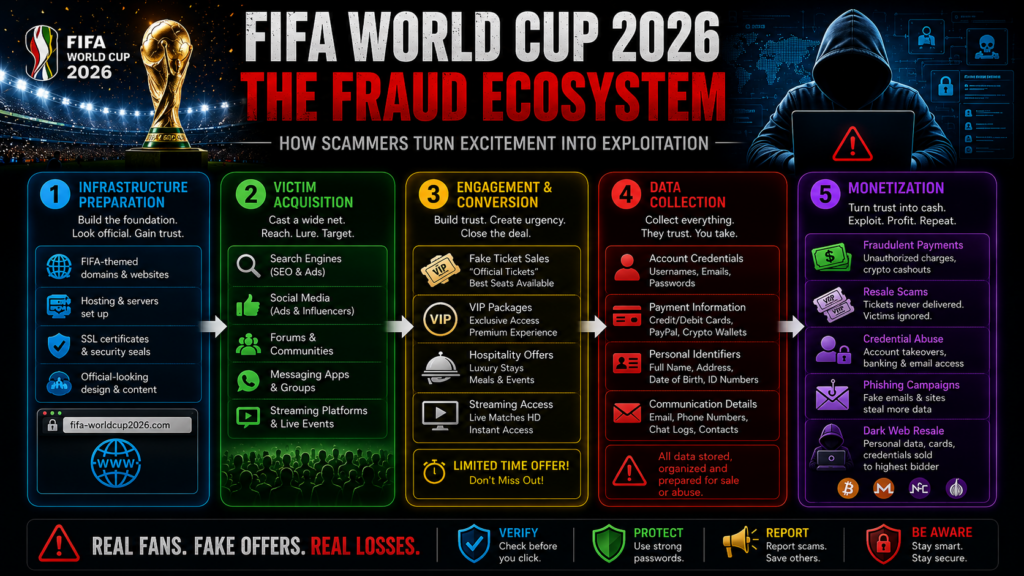
By correlating our findings and research, we reconstructed the end-to-end attack chain used by threat actors. The analysis demonstrates how these seemingly independent activities are strategically aligned around the global popularity of FIFA events, enabling attackers to exploit fan enthusiasm, urgency, and trust. Together, these components form a coordinated FIFA-themed fraud ecosystem designed to attract victims, harvest sensitive information, facilitate financial fraud, and generate sustained criminal revenue.
The stages are as follows:
- Stage 1 – Infrastructure Preparation: Registration of FIFA-themed domains and supporting online assets.
- Stage 2 – Victim Acquisition: Promotion through search engines, social platforms, forums, messaging communities, and streaming portals.
- Stage 3 – Engagement and Conversion: Fake ticket sales, VIP packages, hospitality offers, and streaming access are used to build trust.
- Stage 4 – Data Collection: Harvesting of credentials, payment information, personal identifiers, and communication details.
- Stage 5 – Monetization: Fraudulent payments, resale scams, credential abuse, phishing campaigns, and potential resale on the dark web of collected information.
Conclusion
Operation FanTrap demonstrates how global sporting events have evolved into highly attractive targets for organized cybercriminal activity. Rather than relying on isolated phishing campaigns or opportunistic scams, threat actors are building interconnected ecosystems that combine malicious infrastructure, social engineering, messaging platforms, streaming lures, and dark web activity to maximize financial returns.
The nearly 4,000 domains identified by CRIL represent only one layer of a broader operation designed to exploit fan enthusiasm, event urgency, and global online engagement. Ticket scams, VIP access fraud, streaming lures, and alleged football-sector identity leaks collectively illustrate how attackers are diversifying their monetization strategies throughout the tournament lifecycle.
As the FIFA World Cup 2026 continues, organizations, broadcasters, ticketing providers, and fans should view these activities not as isolated incidents but as components of an active and evolving cybercrime ecosystem. Continuous monitoring, rapid infrastructure disruption, dark web visibility, and proactive user awareness will remain critical to reducing risk throughout the tournament.
CRIL will continue tracking this cluster and updating IoCs as new infrastructure emerges. All indicators are submitted to Cyble’s threat feeds and accessible to Vision platform customers. Fan-facing brands, ticketing platforms, and event organizers should treat this as an active threat and prioritize domain monitoring and takedown workflows throughout the tournament.
Recommendations
Based on the findings presented above, CRIL recommends the following actions for immediate consideration by security teams and organizations:
- Implement keyword-aware domain monitoring that flags FIFA, tournament branding, and language-prefix patterns (zh-, cn-, kr-) as compounding risk signals alongside registrar identity, TLD, and domain age.
- Build takedown workflows that account for Cloudflare-proxied infrastructure — abuse requests must target the underlying origin, not the CDN layer, to be operationally effective.
- Integrate campaign-cluster pivoting from confirmed IoCs into threat hunting workflows, using shared IP subnets and registrar concentration as primary pivot axes.
- Apply multi-platform fraud funnel awareness: detection should extend beyond domains to Telegram and WhatsApp channels used for off-platform transaction completion.
- For ticketing platforms and official broadcasters: issue proactive fan advisories confirming that legitimate ticket transactions will never be negotiated via private messaging apps or unverified resale portals.
- Revise security awareness materials to teach structural URL interpretation — with specific focus on identifying lookalike FIFA domains that embed official terminology in subdomains or hyphenated strings rather than the root registered domain.
- Monitor dark web forums for emerging data leak claims targeting football organizations, and treat leaked PII — particularly passport and contract data — as an active social engineering enabler requiring targeted victim notification.
The need for a proactive cyberdefense stance
The current threat landscape includes a multitude of Social Engineering campaigns. Security teams need more than reactive controls to keep ahead of these.
Solutions such as Cyble Vision deliver operational intelligence that enables defenders to stay ahead of adversaries through early detection, campaign-level visibility, and infrastructure mapping.
Cyble Vision specifically empowers security teams to move beyond isolated detection, providing the strategic insight needed to anticipate threats, monitor adversary activity, and respond with precision at every stage of the attack lifecycle. Security teams can take necessary preventive action with the help of:
- Real-Time IOC Monitoring
Enable continuous tracking of indicators tied to adversary infrastructure before they reach end users.
- Credential Phishing Infrastructure Mapping
Map attacker-controlled infrastructure, including fake authentication portals, dynamic exfiltration endpoints, and backend logic designed to capture credentials.
- Brand and Executive Impersonation Monitoring
Detect domain spoofing and impersonation attempts targeting internal functions such as HR and Finance—often used to increase trust and exploit user familiarity.
- Deep and Dark Web Visibility
Surface chatter, leaked credentials, and phishing toolkits from deep/dark web sources, offering early insight into attacker preparation and target selection.
- Global Targeting Intelligence
Track phishing activity across global regions—including North America, EMEA, and APAC—as well as over 70 industry sectors, providing defenders with contextual understanding of targeting patterns.
- Threat Actor Attribution and TTP Correlation
Associate infrastructure, techniques, and behavioral patterns with known threat actors, empowering security teams to prioritize response based on adversary capability and intent.
MITRE ATT&CK® Techniques
| Tactic | Technique ID | Technique Name |
| Resource Development | T1583.001 | Acquire Infrastructure: Domains |
| Resource Development | T1583.006 | Acquire Infrastructure: Web Services |
| Resource Development | T1585.001 | Establish Accounts: Social Media Accounts |
| Initial Access | T1566.002 | Phishing: Spearphishing Link |
| Credential Access | T1056.003 | Web Portal Capture |
| Command and Control | T1102 | Web Service |
| Impact | T1657 | Financial Theft |
Indicators of Compromise (IOCs)
The IOCs have been added to this GitHub repository. Please review and integrate them into your Threat Intelligence feed to enhance protection and improve your overall security posture.
如有侵权请联系:admin#unsafe.sh