
India has temporarily enforced a Telegram Ban in India ahead of the NEET UG 2026 Re-examina 2026-6-17 09:14:1 Author: thecyberexpress.com(查看原文) 阅读量:4 收藏
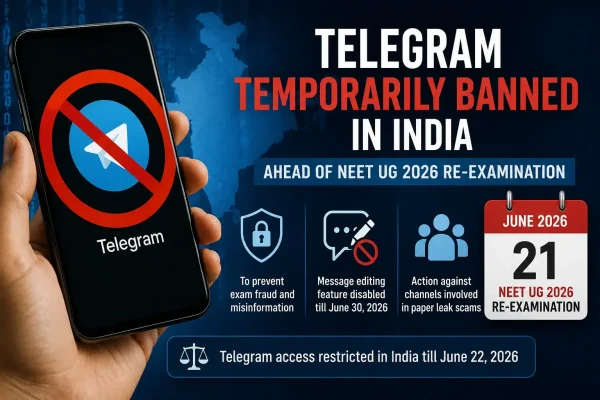
India has temporarily enforced a Telegram Ban in India ahead of the NEET UG 2026 Re-examination, citing concerns that the platform could be used by organized cheating networks to target candidates. The restriction, recommended by the National Testing Agency (NTA) and implemented through directions issued by the Ministry of Electronics and Information Technology (MeitY), will remain in effect until June 22, 2026.
According to the NTA, the measure is intended to support the safe and secure conduct of the NEET re-examination scheduled for June 21, 2026, and prevent the spread of fraudulent claims related to exam papers.
Telegram Ban in India Limited to Examination Period
The temporary Telegram Ban in India has been imposed under Section 69A of the Information Technology Act, 2000. The restriction is limited to a defined period covering the examination day and its immediate aftermath.
In addition to restricting access to the platform, authorities have directed Telegram to disable its Telegram Message Editing Feature in India until June 30, 2026. The NTA stated that the feature has been misused in the past to create misleading claims of Paper Leak incidents after examinations had already taken place.
The agency noted that the temporary measures were adopted after other enforcement actions had already been pursued and were intended to address concerns during the examination window with the minimum restriction considered necessary.
Coordinated Action Against NEET UG 2026 Exam Fraud Networks
The NTA credited the Indian Cyber Crime Coordination Centre (I4C), operating under the Ministry of Home Affairs, for coordinating action against channels and groups allegedly involved in Exam Fraud targeting NEET candidates.

According to the agency, I4C worked with state law enforcement agencies and MeitY to identify and remove numerous Telegram channels, groups, and bots that openly advertised access to examination papers or related services.
Authorities said several channels used names such as “PAPER LEAKED NEET,” “Re-NEET 2026,” and similar variations while demanding payments from candidates and their families in exchange for purported access to examination material.
The NTA reiterated that no examination paper was available outside the secured examination process and described such offers as fraudulent.
Why the Message Editing Feature Was Restricted
The direction related to the Telegram Message Editing Feature addresses concerns about fabricated evidence of examination leaks.
According to the NTA, Telegram administrators can edit previously published messages while retaining the original posting timestamp. Authorities stated that this capability has been used in multiple examinations to replace earlier content with actual question papers after an exam had concluded, creating the appearance that the material had been shared before the test.
The temporary restriction on editing existing messages is intended to prevent the creation and circulation of such misleading content during the post-examination period.
Law Enforcement Investigations Continue
Authorities also pointed to ongoing enforcement actions in several states. The Bihar Police Economic Offences Unit issued a public advisory on June 9, warning candidates against fraudulent claims of pre-examination paper access circulating through Telegram and other online platforms.
Separately, the Ahmedabad City Cyber Crime Branch arrested members of an alleged inter-state cyber fraud network accused of operating multiple Telegram channels linked to the same scheme. Investigators reported documented transactions worth approximately ₹1.5 crore and outreach to nearly 1,000 mobile numbers within a month.
NTA Reassures Candidates
The NTA acknowledged that the restriction affects users who rely on Telegram for educational, professional, and personal communication. However, the agency emphasized that the measure is temporary and focused on protecting the integrity of the NEET UG 2026 Re-examination.
The examination will proceed as scheduled on June 21. The agency urged candidates to ignore unverified information circulating online and rely only on official NTA communication channels for updates.
Officials also encouraged students and parents to report suspicious activities through the national cybercrime reporting mechanisms and remain cautious of claims related to examination papers circulating on any platform.
如有侵权请联系:admin#unsafe.sh